Dave’s Killer Bread Revives Cult-Favorite Pumpkin Spice Madness Bagels Nationwide in Strategic Seasonal Expansion

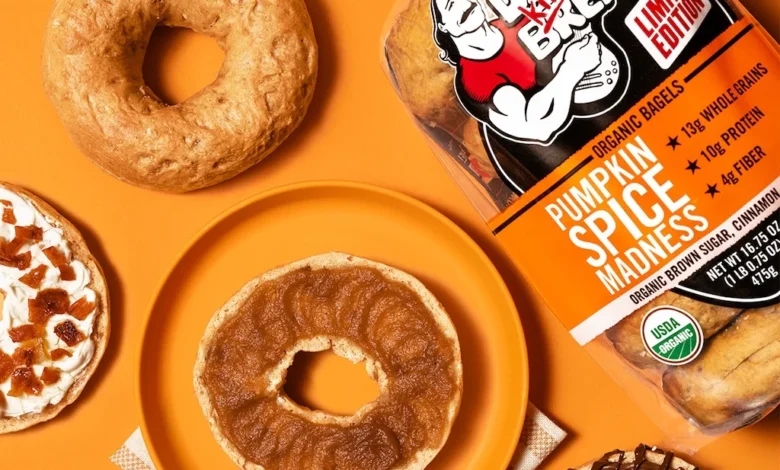
The autumn retail landscape is once again saturated with autumn-themed flavors, but this year marks a significant return for one notable bakery brand. Dave’s Killer Bread, widely recognized for its nutrient-dense, organic whole-grain products, has officially brought back its discontinued "Pumpkin Spice Madness" bagels. After a seven-year hiatus that followed a limited regional run, the seasonal offering is hitting shelves nationwide, signaling a major strategic shift for a brand traditionally anchored in year-round, core grocery staples.
Available now through November, the newly reformulated bagels have secured distribution in approximately 15,000 retail locations across the United States. Major nationwide grocers, including Kroger, Albertsons, Safeway, H-E-B, Target, and Walmart, are carrying the product as part of an aggressive push to capture consumer spending during the peak autumn shopping season.
This nationwide rollout represents more than just a nostalgic menu revival. It is the physical manifestation of a multi-year product development strategy designed to crack the code of limited-time offerings (LTOs) within the traditionally rigid and predictable bakery aisle.
Overcoming the Constraints of the Bread Aisle
Unlike fast-moving consumer goods categories such as coffee creamers, yogurts, craft beers, and seasonal cookies—where flavor rotations and autumn-themed variants are expected and easily managed—the commercial bread aisle operates under entirely different commercial constraints. Shelf space in retail baking is fiercely contested, with grocers heavily prioritizing year-round, high-volume core varieties over transient, short-term novelties.
When Dave’s Killer Bread initially launched its pumpkin spice bagel years ago, the company was navigating a period of significant corporate transition. Following its acquisition by Flowers Foods in 2015, the brand was actively working to scale its operations and diversify beyond its foundational loaf recipes. However, the operational realities of the LTO model presented steep hurdles.
Cristina Watson, senior director of brand management for Dave’s Killer Bread, noted that executing a short-term seasonal run in the bread category requires dedicated shelf space that retailers are hesitant to surrender for only a few weeks.
"We couldn’t have a space on the shelf dedicated to us for just four months," Watson explained.
To justify carving out permanent promotional real estate with retail partners, the brand realized it had to build out a robust, year-round rotational program. Rather than relying on a solitary autumn drop, the company needed a continuous pipeline of seasonal and rotating flavors that could seamlessly swap in and out of retail displays throughout the calendar year, maximizing the value of limited shelf footprints.
A Rigorous R&D Process and Recipe Redesign
The path to the current nationwide rollout began deep inside the company’s research and development kitchens. According to Watson, the R&D team experimented with approximately a dozen experimental and unconventional bagel concepts, including flavors like peppermint mocha and hot chocolate. Ultimately, consumer testing and internal evaluations indicated that pumpkin spice was the undisputed front-runner, possessing the universal consumer appeal required to anchor a major seasonal campaign.
Before bringing the product back to market, however, the culinary team went back to the drawing board to refine the formula. The objective was to modernize the recipe to meet contemporary consumer expectations for bold, aromatic autumn flavor profiles while maintaining the brand’s strict nutritional standards.
The updated Pumpkin Spice Madness bagel retains the brand’s hallmark nutritional credentials, featuring organic whole grains, 10 grams of protein, and 4 grams of dietary fiber per serving. To elevate the sensory experience, the recipe was updated to include brown sugar, which imparts a richer, warmer sweetness designed to stand out against competing seasonal baked goods. Cinnamon and nutmeg round out the profile, ensuring the product delivers the robust aromatic experience that modern pumpkin spice enthusiasts demand.
Chronology of Expansion: From Regional Discontinuation to National Rollout
The evolution of Dave’s Killer Bread’s seasonal strategy unfolded across a distinct timeline, highlighting the operational hurdles of scaling bakery innovations:
- 2015: Flowers Foods acquires Dave’s Killer Bread, initiating a broader corporate strategy to diversify product lines beyond traditional sliced bread into categories like bagels.
- 2017: The original regional run of the Pumpkin Spice Madness bagel is quietly discontinued as the brand struggles to establish a sustainable operational model for short-term, limited-edition bakery items.
- 2021–2023: Accelerated shifts in e-commerce and grocery merchandising strategies increase retailer demand for rotational products that create dynamic in-store experiences. The brand begins quietly laying the groundwork for a continuous seasonal portfolio.
- April 2024: Dave’s Killer Bread launches a warm-weather seasonal variant, the Summer Berry bagel, establishing the operational cadence required for a multi-season rotational program.
- Fall 2024: The Pumpkin Spice Madness bagels officially return, making their nationwide debut across 15,000 retail doors following the successful proof-of-concept established earlier in the year.
- Post-November 2024: The brand prepares to transition shelf space from autumn flavors to a planned savory seasonal bagel variety, completing the annual rotational cycle.
Tapping into Evolving Consumer Habits and Retailer Pressures
The decision to lean heavily into seasonal rotations is also a direct response to changing retail dynamics. Over the past half-decade, the explosive growth of online grocery shopping and click-and-collect services has fundamentally altered how physical supermarkets merchandise their floors. Brick-and-mortar grocers are increasingly forced to curate unique in-store experiences that incentivize physical shopping trips, relying heavily on "shiny object" limited-time offers to drive foot traffic and consumer engagement.
At the same time, internal consumer research conducted by Dave’s Killer Bread revealed a strong and growing affinity for bagels as a morning meal solution. Surveys indicated that approximately one in three consumers favor bagels for breakfast, a habit that has fueled consistent year-over-year volume growth for the brand’s bagel portfolio. This steady baseline demand provided management with the confidence that consumers would embrace adventurous flavor extensions from a trusted label.
"Bread is not like coffee creamers or yogurts or cookies or even alcohol, where you see pumpkin spice beer," Watson noted, emphasizing the unique challenge of injecting excitement into a legacy category. "So these flavors help add a little bit of fun to an otherwise pretty boring category."
Market Implications and the Future of Bakery Innovation
The successful reinvigoration of the Pumpkin Spice Madness line illustrates a broader trend across the packaged food industry: legacy brands are being forced to behave like agile innovators to maintain shelf dominance against private label expansion and nimble direct-to-consumer competitors.
For Dave’s Killer Bread, the strategy successfully bridges the gap between functional nutrition and indulgent consumer trends. By embedding whole grains, high protein, and fiber into an indulgent seasonal format, the brand successfully mitigates the guilt traditionally associated with autumnal comfort foods.
As the autumn season concludes, the brand plans to test the strength of its new rotational framework immediately. Following the departure of the pumpkin spice bagels in late November, Dave’s Killer Bread will introduce a brand-new savory seasonal flavor designed to maintain the momentum in retail aisle space.
This continuous cycle of introduction ensures that retailers no longer have to sacrifice valuable footprint for fleeting novelties, setting a new precedent for how functional, mainstream baking brands can successfully participate in the high-stakes seasonal economy.